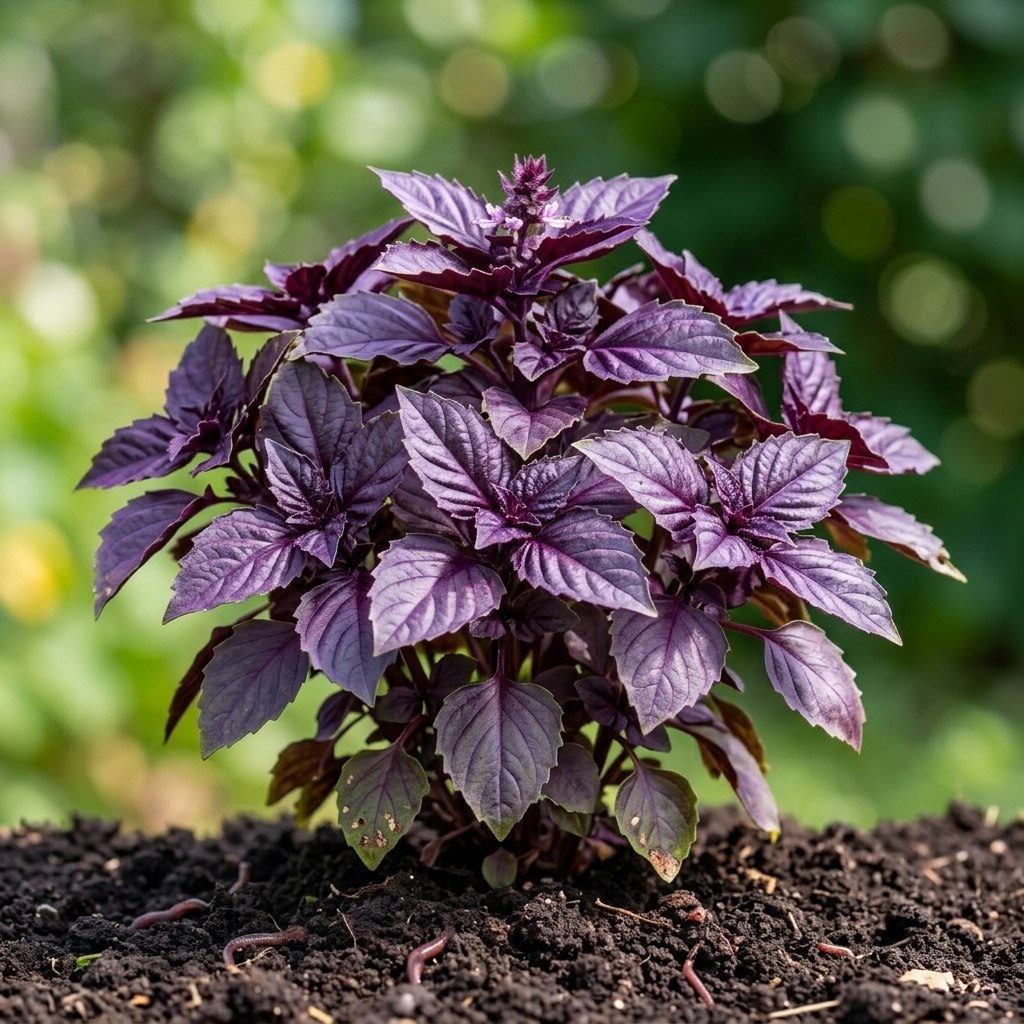
Purple Basil
Ocimum basilicum
Intense violet leaves with complex floral and anise aromas.- Rich in anthocyanins with powerful antioxidant properties
- Source of vitamin K, flavonoids and anti-inflammatory essential oils
- Natural antibacterial properties from eugenol and linalool
Origine des graines : Pays-Bas
Certification bio NL-BIO-01.528-0006532.2025.002
GTIN : 3770042795093
Plant Profile

Cultivation Calendar
Growing Tips
Sowing Conditions and Method for Purple Basil
Purple basil sowing is best carried out indoors or under cover from mid-March onwards, when natural light is sufficient and night temperatures remain stable above 15°C. Prepare a light, well-draining substrate using fine potting mix blended with 20% perlite for optimal drainage. The ideal germination temperature is between 20 and 25°C; below 18°C, germination will be very slow or absent. Sow seeds on the surface or under a maximum of 2 mm of substrate, as basil requires light to germinate correctly. Keep the substrate slightly moist using a gentle mister, avoiding any excess water that could cause damping-off. Cover the tray with a plastic film or transparent lid to maintain warmth and humidity until the first shoots appear.
Germination and Young Plant Development
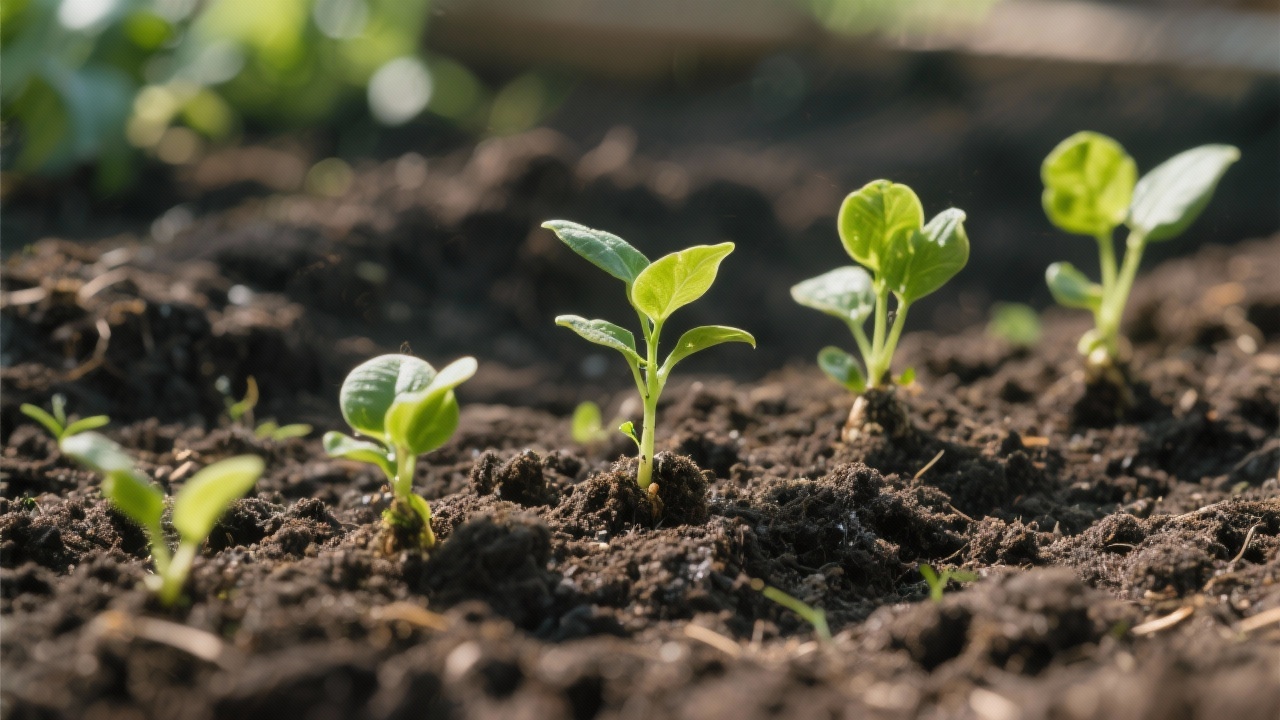
Purple basil germination generally occurs within 5 to 10 days under good temperature conditions. As soon as the cotyledons appear, remove the cover to improve air circulation and prevent fungal diseases. Expose plants to bright light — a minimum of 6 hours per day — to avoid etiolation and obtain robust stems. The characteristic violet coloration develops progressively under the influence of light and heat. At the 2 true-leaf stage, transplant into individual 8 cm pots, handling roots delicately. Wait until all frost risk has passed before planting outdoors, typically after 15 May in Alsace and temperate French regions.
- Temperature: 20–25°C, substrate minimum 20°C for germination
- Humidity: Slightly moist substrate, never waterlogged
- Light: Bright light essential from germination, 6h minimum/day
- Transplanting: 2 true leaves, approximately 3–4 weeks after sowing
Key Points
- Temperature: 20–25°C, substrate minimum 20°C
- Humidity: Slightly moist, gentle misting
- Light: Bright light from germination, 6h/day minimum
- Transplanting: 2 true leaves, 3–4 weeks after sowing
Planting Conditions for Purple Basil
Purple basil is planted outdoors or in containers only after all frost risk has passed, from mid-May in most French regions. Choose a very sunny position, south or south-west facing, sheltered from cold winds. Prepare the soil by loosening it to 15–20 cm depth, incorporating mature compost to enrich the substrate and improve water retention. A light, well-drained and slightly acidic soil (pH 6.0 to 7.0) is ideal. Before planting, acclimatize seedlings progressively for 7 to 10 days by exposing them outside during the day and bringing them in at night. This hardening phase is essential to prevent thermal shock and achieve vigorous establishment.
Planting Out and Establishment
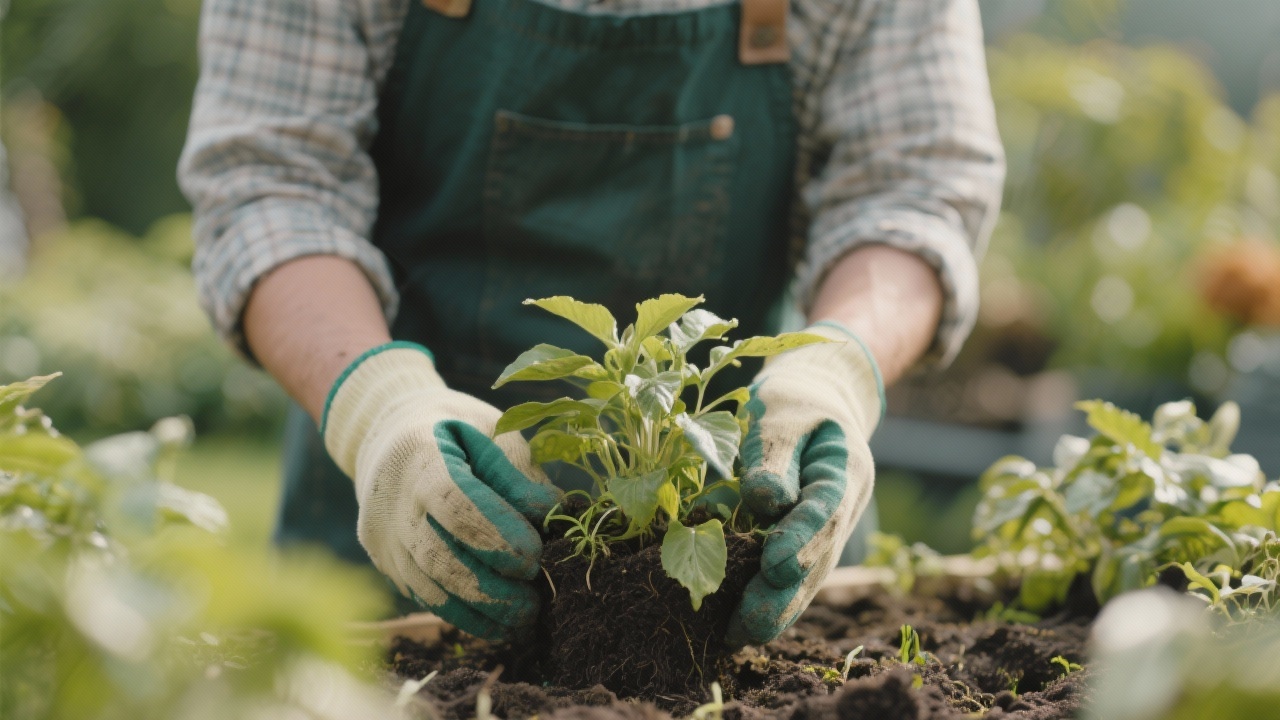
Plant each seedling ensuring the collar sits slightly above soil level to prevent collar rot. Water immediately after planting, forming a watering basin around each plant to concentrate water at the base. Maintain a spacing of 25 to 30 cm between plants to allow good air circulation and facilitate harvesting. Light mulching around the base helps retain moisture while warming the soil. In the event of a late cold snap, cover plants with a fleece to protect them.
- Depth: Collar at soil level, never buried
- Spacing: 25–30 cm between plants, 30 cm between rows
- Watering: Basin watering immediately after planting, then regular
- Protection: Frost fleece if risk of late cold snap
Key Points
- Depth: Collar at soil level
- Spacing: 25–30 cm between plants
- Watering: Basin watering immediately after planting
- Mulching: Light mulch to retain soil warmth
Managing Growth and Watering of Purple Basil
Purple basil is a plant demanding in heat and light that requires regular but moderate watering — approximately 2 to 3 times per week in summer, more frequently during heatwaves. Water preferably in the morning at the base of plants, avoiding wetting the leaves to prevent spots and fungal diseases. The most important maintenance operation is the regular pinching of flower stems as soon as they appear: remove them systematically to concentrate energy into the production of fragrant leaves and delay bolting. A light fertilization every 3 weeks with a balanced organic fertilizer or liquid compost stimulates growth without affecting the aromatic quality of the violet leaves.
Health Protection and Ecological Balance
Purple basil is susceptible to aphids, spider mites and powdery mildew in hot, dry conditions. Inspect the underside of leaves regularly and treat early with soapy water or diluted Bordeaux mixture if necessary. Crop rotation — avoiding replanting basil in the same spot two consecutive years — limits soil-borne diseases. Beneficial associations with tomatoes or peppers benefit both crops: basil deters certain pests while the larger plants offer a favorable microclimate. Maintain night temperatures above 12°C, as basil is very sensitive to cold.
- Soil type: Light, well-drained, rich in organic matter, pH 6.0–7.0
- Care: Regular flower pinching, gentle weeding
- Watering: 2–3 times/week at the base, do not wet leaves
- Prevention: Tomato companion planting, annual rotation, aphid/mite monitoring
Key Points
- Soil type: Light, drained, rich, pH 6.0–7.0
- Care: Regular flower pinching, fertilize every 3 weeks
- Watering: 2–3 times/week at base, never wet leaves
- Prevention: Monitor aphids/mildew, tomato companion beneficial
Harvesting and Storing Purple Basil
Purple basil harvesting can begin once the plant has at least 6 pairs of leaves and the stems are well developed, generally 6 to 8 weeks after transplanting. Harvest preferably in the morning, after the dew has evaporated, to maximize the concentration of essential oils. Use clean scissors or pinch stems just above a pair of leaves: this action stimulates branching and encourages abundant, continuous production throughout the season. Never remove more than a third of the plant at one time. Regular harvesting of flowers as they appear is essential to extend leaf production.
Post-Harvest Preservation Methods
Purple basil stores poorly in the refrigerator, which causes rapid blackening. The best short-term preservation method is to place the stems in a glass of water at room temperature, away from direct sunlight. For long-term storage, several options are available: air drying in hanging bunches in a ventilated, dark place, freezing in whole leaves lightly coated in oil, or preparing aromatic oils and flavored vinegars. Purple basil pesto, slightly different from the classic version, freezes very well in individual portions and retains its fragrance for 6 months.
- Period: June to October, from 6 pairs of developed leaves
- Stage: Before flowering, leaves well developed and aromatic
- Method: Clean scissors above a pair of leaves, max 1/3 of plant
- Storage: Glass of water at room temperature, freezing or drying
Key Points
- Period: June–October, from 6 pairs of leaves
- Stage: Before flowering, leaves well developed
- Method: Scissors above a leaf pair, max 1/3
- Storage: Glass of water or freeze in oil
Flavors and Culinary Uses of Purple Basil
Purple basil displays a unique aromatic profile — both floral and slightly anise-like, with more pronounced spicy notes than classic green basil. Its intense violet color, due to the presence of anthocyanins, adds a spectacular decorative element to culinary preparations. Used fresh, it enhances summer salads, tomato carpaccios and fresh cheeses. Finely chopped, it perfumes oils, vinaigrettes and marinades with a delicate and persistent aroma. The violet color creates a beautiful red-pink colored vinegar highly valued for its aesthetic and culinary qualities. In pesto, it advantageously replaces green basil by adding an additional colorful and aromatic dimension.
Nutrition, Pairings and Storage
Rich in anthocyanins, flavonoids and essential oils, purple basil has remarkable antioxidant properties superior to green basil. It also provides vitamins K and C as well as essential minerals. In the kitchen, it pairs perfectly with mozzarella, roasted peppers, red fruits and dishes with Mediterranean accents. Always add leaves at the very end of cooking to preserve their fragrance and color. For storage, avoid the refrigerator which quickly blackens the leaves; prefer storage in a glass of water or freezing in olive oil portions. Dried leaves lose their color but retain good aromatic intensity for infusions and spice blends.
- Flavor profile: Floral, anise, spicy, slightly more intense than green basil
- Classic uses: Salads, colored pesto, flavored vinegar, carpaccio
- Best pairings: Tomatoes, mozzarella, red fruits, peppers, olive oil
- Storage: Glass of water at room temperature or oil-freeze, avoid fridge
Key Points
- Flavor profile: Floral, anise, spicy, slightly peppery
- Classic uses: Salads, colored pesto, flavored vinegar
- Best pairings: Tomatoes, mozzarella, red fruits, olive oil
- Storage: Glass of water, oil-freeze, never refrigerate