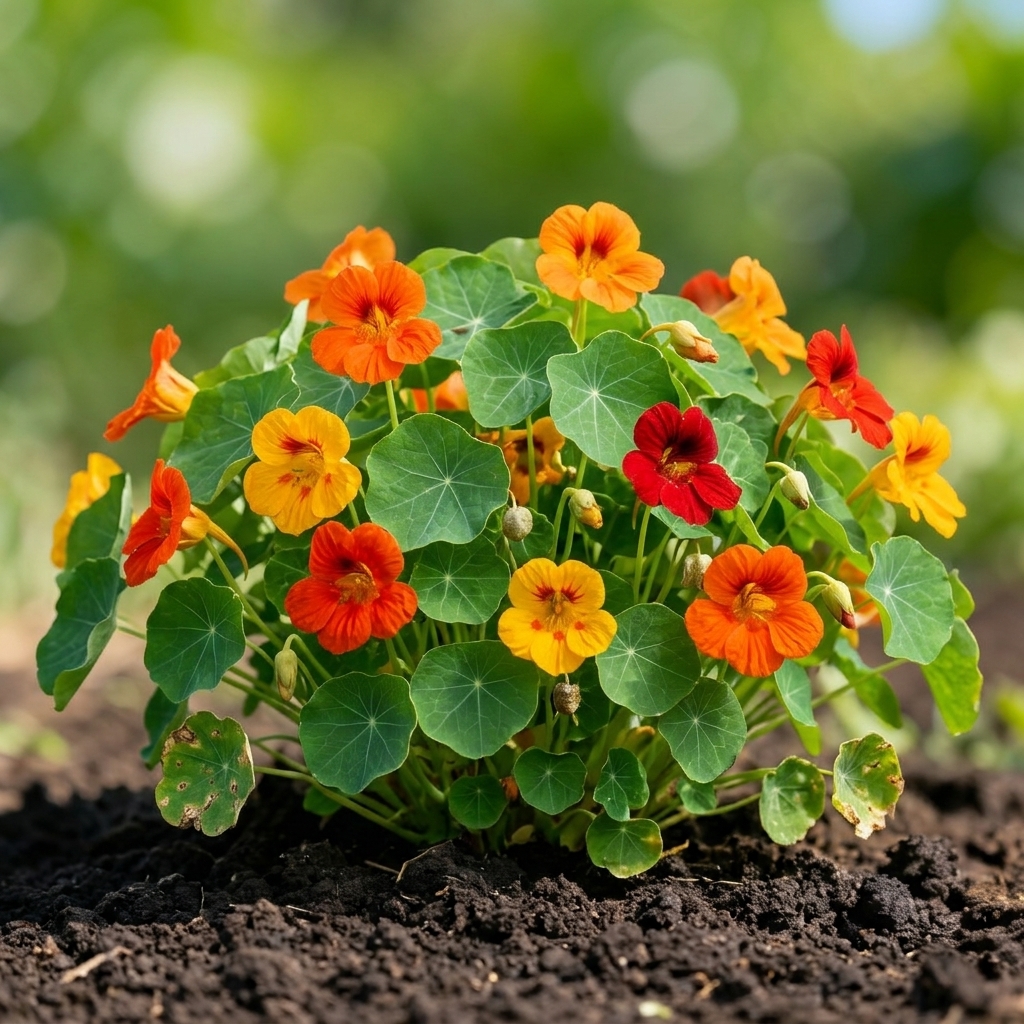
Dwarf Nasturtium
Tropaeolum majus
Peppery edible flowers in compact mounds, ideal for containers and balconies.- Rich in isothiocyanates, natural antibacterials for the respiratory tract
- Exceptional source of vitamin C and protective antioxidants
- Ideal in containers for balconies, productive and decorative all season
Origine des graines : Pays-Bas
Certification bio NL-BIO-01.528-0006532.2025.002
GTIN : 3770042795000
Plant Profile

Cultivation Calendar
Growing Tips
Sowing Dwarf Non-Climbing Nasturtium
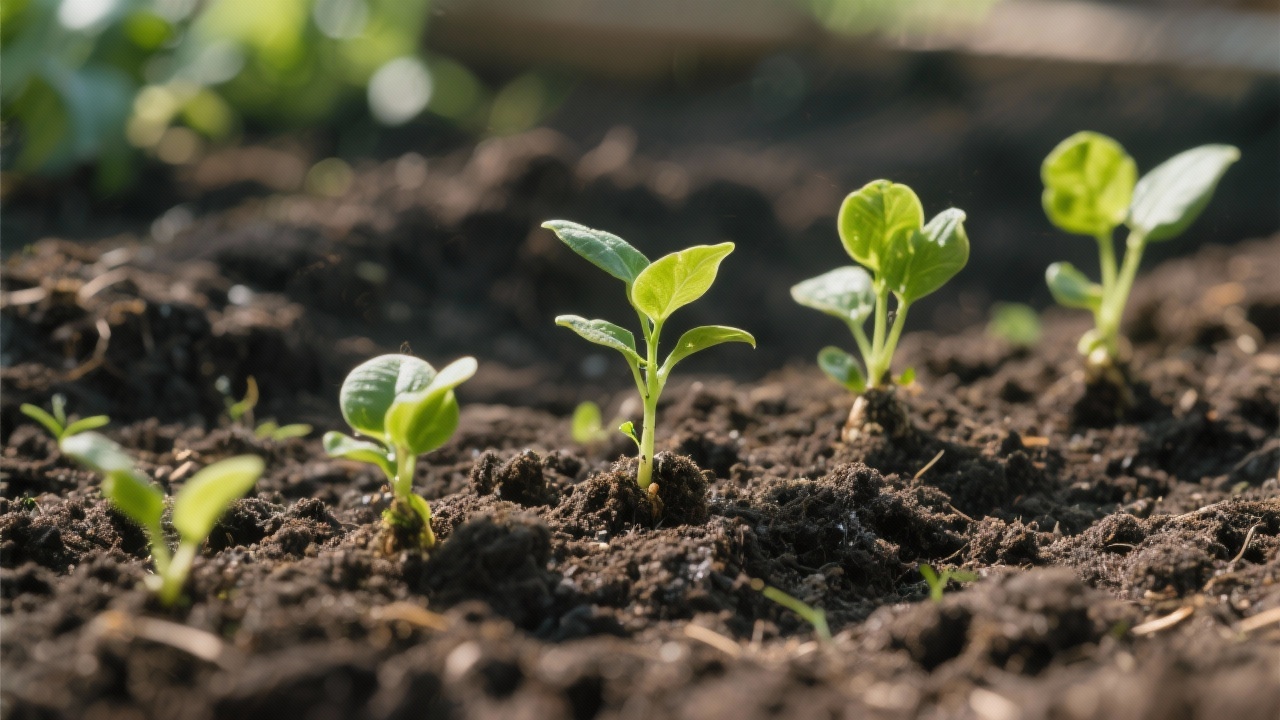
The dwarf non-climbing nasturtium (Tropaeolum majus) is sown in exactly the same way as its climbing cousin, but produces compact mound-shaped plants 25 to 35 cm tall, ideal for containers, window boxes, balcony rails and garden borders. Sow directly in place from late April at 2 to 3 cm depth, spaced 15 cm apart. Germination occurs in 7 to 12 days at 15–20°C. Indoors, sowing in individual 9 cm pots in March allows flowering from May–June. The large seeds are easy to handle one by one. Soaking in warm water for 12 hours before sowing accelerates germination. Thin to one plant per location once they reach 8 cm.
Development and Characteristics of the Dwarf Form
Dwarf nasturtium develops into a rounded, compact mound, easier to manage than the climbing form. It is perfectly suited to small spaces, balconies and containers. Its flowering, though slightly less abundant than the climber, is continuous and colorful from June until the frosts. No support is needed. Like climbing nasturtium, it thrives in poor, dry soils: above all avoid nitrogen over-fertilization which would favor foliage at the expense of flowers. It naturally self-seeds in favorable conditions.
- Temperature: 15–20°C, germination 7–12 days
- Humidity: Slightly moist soil, then very economical
- Light: Normal, tolerates light semi-shade
- Transplanting: Direct sowing preferred
Key Points
- Temperature: 15–20°C, germination 7–12 days
- Humidity: Slightly moist soil
- Light: Normal, tolerates semi-shade
- Transplanting: Direct sowing preferred
Planting Dwarf Nasturtium in Containers and Gardens
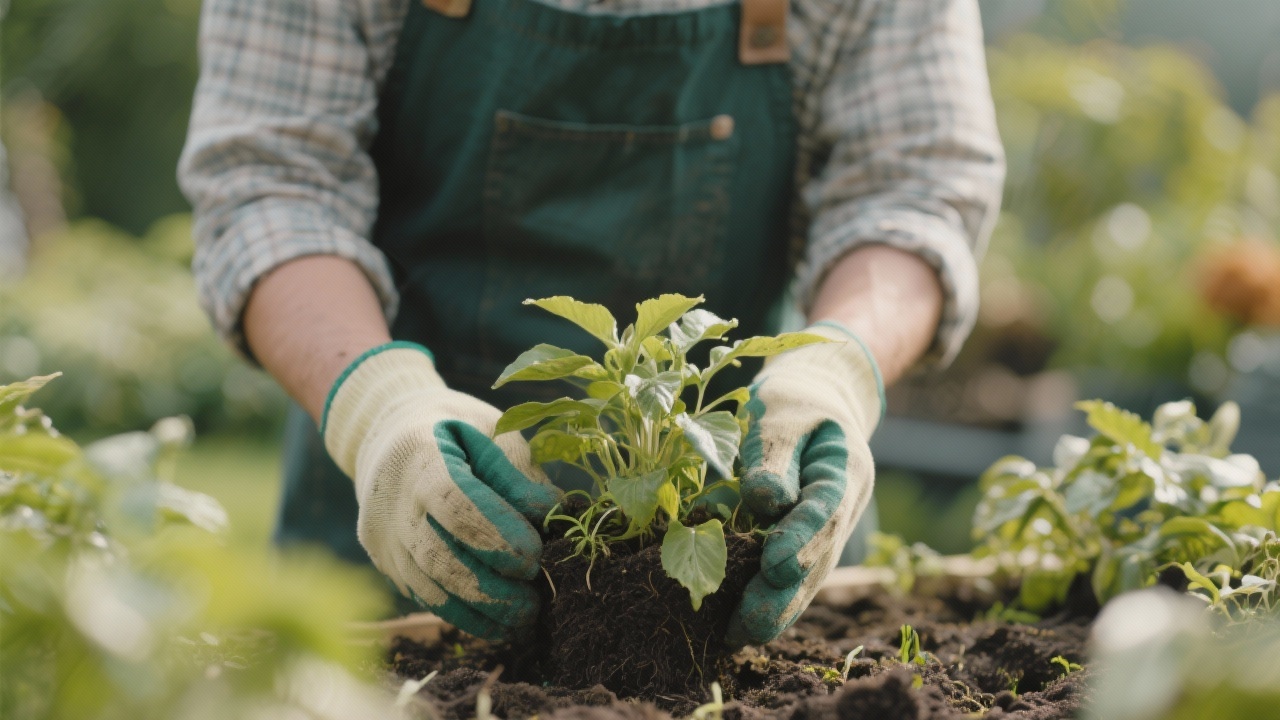
Dwarf nasturtium is ideal for containers, window boxes and compact borders. It adapts to all substrates, even poor and gravelly ones. For container use, choose a light, well-drained substrate based on universal potting mix and sand or perlite (70/30). In containers, it tolerates drier conditions than in garden soil: ensure the base of the container is well perforated to prevent waterlogging. In the garden, nitrogen-poor soil promotes flowering: do not specially prepare soil for this plant. Place containers in a semi-sunny to sunny position for optimal flowering.
Spacing and Window Box Considerations
In window boxes, maintain a spacing of 20 to 25 cm between plants. Combining dwarf nasturtiums with other summer flowers (petunias, zinnias, marigolds) creates appealing colorful compositions. Water moderately after planting. Excessive watering, particularly in containers, rapidly leads to stem and root rot. For continuous flowering, harvest flowers regularly and remove spent growth. In pots, dwarf nasturtium needs no support but may benefit from light trimming at season's end to remain compact.
- Depth: 2–3 cm
- Spacing: 20–25 cm, ideal for containers and window boxes
- Watering: Very moderate, excellent drainage required
- Soil: Poor preferred, well-drained
Key Points
- Depth: 2–3 cm
- Spacing: 20–25 cm in container or window box
- Watering: Very moderate
- Soil: Poor and well-drained
Care for Dwarf Nasturtium
Like climbing nasturtium, dwarf nasturtium requires very little maintenance. The main rule is not to fertilize — soil too rich in nitrogen produces magnificent foliage but very few flowers. In containers, do not choose enriched universal compost, or dilute it with sand or perlite. Water sparingly and allow the substrate to dry between waterings. Remove spent flowers to stimulate production. During intense summer heat, more frequent watering may be needed for container plants which dry out faster. No staking needed thanks to its naturally compact form.
Pest Management and Decorative Role
Dwarf nasturtium can be colonized by black aphids en masse, particularly early in the season. This property can be used as a trap plant placed strategically away from susceptible crops. In case of troublesome heavy infestation, treat with a forceful water jet or potassium soap. Red spider mite may appear in very hot, dry container conditions: increase watering frequency and mist foliage. Dwarf nasturtium is also valued as a nectar plant attracting pollinators — a precious advantage on balconies and terraces.
- Soil type: Poor to moderate, well-drained, pH 5.5–7.5
- Care: Regular deadheading, do not fertilize
- Watering: Very low to moderate depending on exposure
- Prevention: Aphid trap plant, monitor red spider mite in containers
Key Points
- Soil type: Poor, well-drained
- Care: Deadheading, do not fertilize
- Watering: Very low
- Prevention: Aphid trap plant
Harvesting Flowers and Young Edible Parts
All parts of dwarf nasturtium are edible like the climbing variety. Flowers are harvested at full opening by pulling on the flower stalk. Young round leaves of 3 to 5 cm are the most tender and flavorful. Young green fruits, harvested 3 to 4 days after petal fall, are used to prepare nasturtium capers. Regular picking, every 2 to 3 days at peak flowering, maintains continuous production. Flowers open in rapid succession on stems: a window box of dwarf nasturtiums produces dozens of flowers per week at the height of summer.
Post-Harvest Preservation
Fresh flowers keep 12 to 24 hours in the refrigerator in a perforated bag. Freezing in ice cubes, vinegar capers and sugar crystallization are the same techniques as for climbing nasturtium. At season's end, harvest ripe brown seeds for the following year's sowings: a single dwarf nasturtium can produce several dozen seeds, ensuring an abundant supply for future seasons. Dwarf nasturtium capers, slightly smaller than climbing variety ones, are just as flavorful and suited to the same culinary preparations.
- Period: June–frosts, continuous production in containers
- Stage: Flowers at full opening, green fruits (capers)
- Method: Delicate picking, very regular harvesting
- Storage: 12–24h fridge, vinegar capers 1–2 years
Key Points
- Period: June–frosts, continuous
- Stage: Open flowers, green fruits (capers)
- Method: Frequent and delicate picking
- Storage: 12–24h fridge or vinegar capers
Dwarf Nasturtium: a Versatile Peppery Edible Flower
Dwarf nasturtium shares all the culinary qualities of the climbing variety in a more practical format. Its flowers with peppery and spicy flavor brilliantly garnish salads, fresh cheeses and appetizer platters. Stuffed with a mixture of fresh goat cheese, herbs and lemon, they make a refined and colorful starter. Young round leaves, slightly less intense than the flowers, are incorporated into salads or blended into a spicy green pesto. Nasturtium capers, prepared from young fruits, advantageously replace classic capers in tartare sauces, pizzas and Mediterranean dishes with an extra heat dimension.
Nutritional and Medicinal Properties
Identical to climbing nasturtium, dwarf nasturtium is rich in benzyl isothiocyanates with antibacterial and antifungal properties, vitamin C, beta-carotene and lutein. It is used in phytotherapy as a natural antiseptic for the respiratory and urinary tract. Its complete nutritional profile (vitamins, minerals, antioxidants) makes it a precious yet little-known functional food. Easy container and balcony cultivation makes it accessible to city dwellers wanting to grow a medicinal and food plant within easy reach throughout summer.
- Flavor profile: Peppery, spicy, watercress, lightly sweet
- Classic uses: Flower salads, stuffed goat cheese flowers, capers, pesto
- Best pairings: Fresh cheese, beetroot, radish, lentils, rocket
- Storage: 12–24h fridge, vinegar capers 1–2 years
Key Points
- Flavor profile: Peppery, spicy, watercress
- Classic uses: Flower salads, stuffed flowers, capers, pesto
- Best pairings: Goat cheese, beetroot, radish, rocket
- Storage: 12–24h fridge or vinegar capers