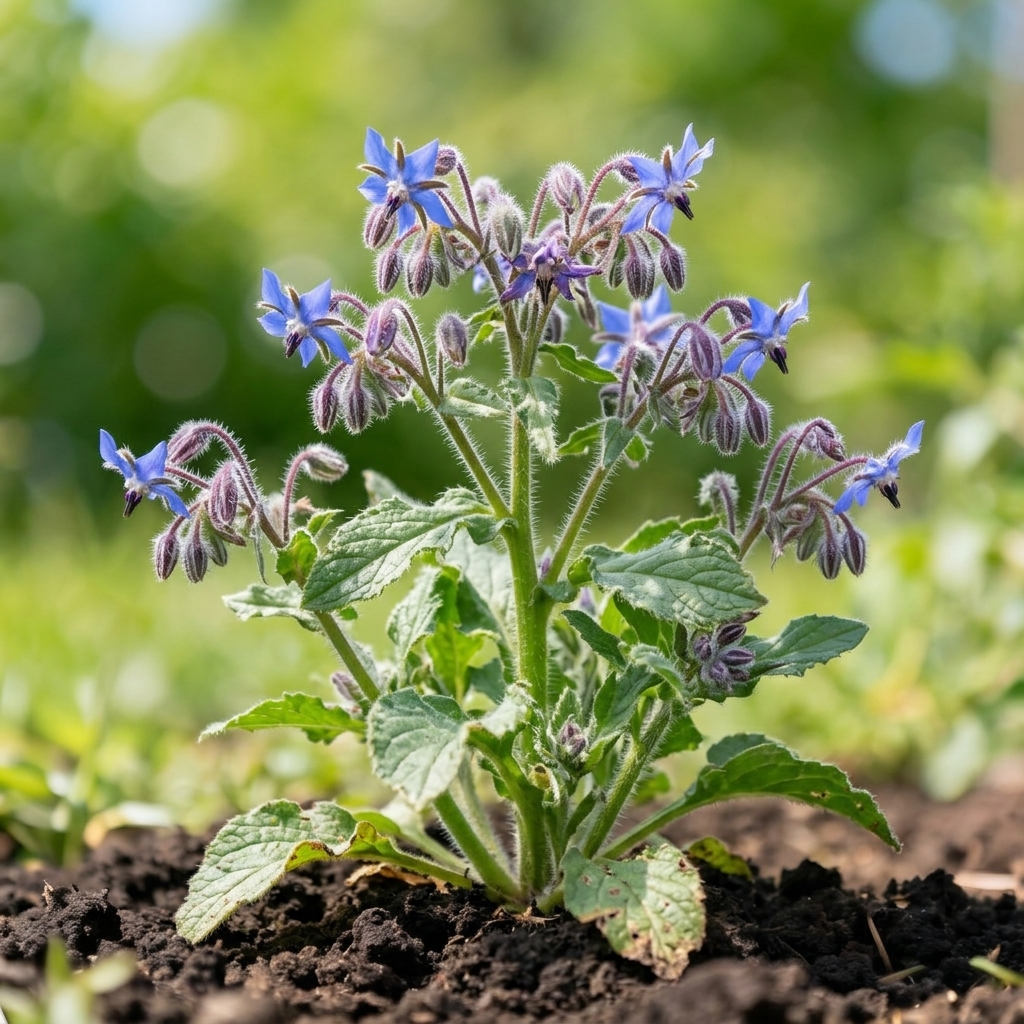
Borage
Borago officinalis
Blue edible nectar-rich flowers with leaves tasting of cucumber.- Source of gamma-linolenic acid (GLA), a powerful anti-inflammatory
- Exceptional nectar plant, promotes vegetable garden pollination
- Rich in minerals (calcium, potassium) and soothing mucilages
Origine des graines : Pays-Bas
Certification bio NL-BIO-01.528-0006532.2025.002
GTIN : 3770042795048
Plant Profile

Cultivation Calendar
Growing Tips
Direct Sowing and Germination Conditions for Borage
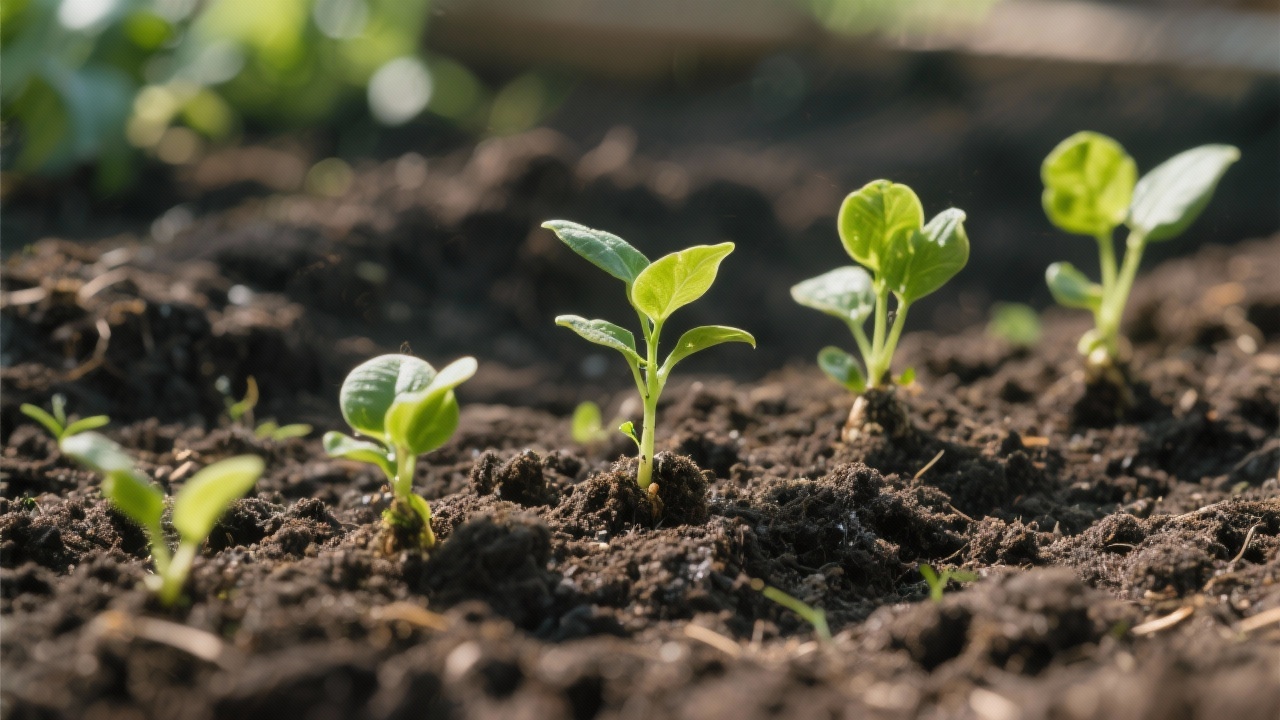
Borage (Borago officinalis) is best cultivated by direct sowing in open ground from March to April, as soon as the soil can be worked and night temperatures remain above 5°C. It tolerates transplanting poorly due to its fragile taproot. Sow seeds at 1 cm depth, spaced 2 cm apart, in groups of 3 seeds. Germination is rapid (5 to 10 days) at a temperature of 15 to 20°C. Thin to one plant per location when they reach 5 cm in height. Staggered sowings every 3 weeks allow flowering to be spread throughout summer.
Natural Development and Self-Seeding
Borage is a prolific natural self-seeder: at season's end, it spontaneously disperses its seeds and returns without effort year after year. Once established, plants develop rapidly and flower within 5 to 8 weeks. Young borage plants have leaves covered with characteristic white hairs that can be prickly to the touch; once dried or cooked, these disappear. Borage is highly nectar-rich and attracts bees and bumblebees in large numbers: its presence in the vegetable garden promotes the pollination of all surrounding crops.
- Temperature: 15–20°C, direct sowing preferred
- Humidity: Slightly moist soil, borage tolerates drought well
- Light: Full sun to semi-shade
- Transplanting: Not recommended (fragile taproot)
Key Points
- Temperature: 15–20°C, rapid germination 5–10 days
- Humidity: Slightly moist to moderate
- Light: Full sun or semi-shade
- Transplanting: Direct sowing strongly recommended
Preparation and Planting of Borage
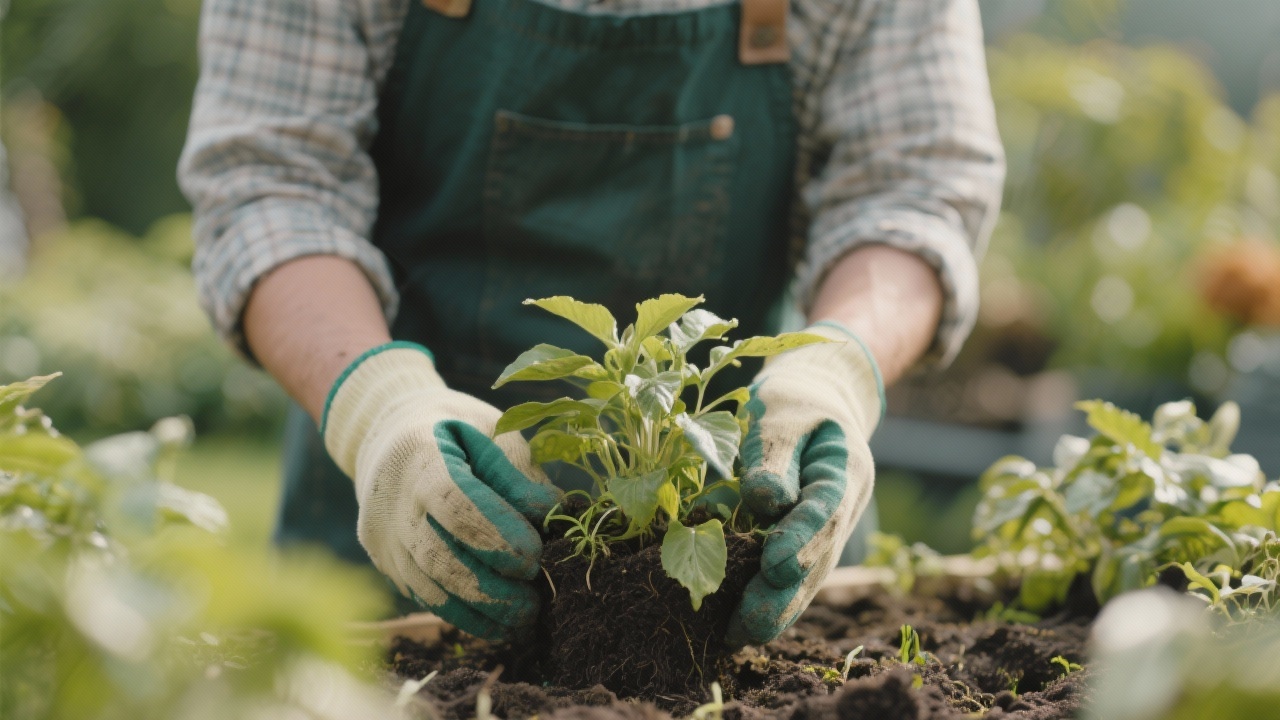
If you must transplant borage (rare case), do so when very young (cotyledon or first true-leaf stage) to minimize root shock. Borage adapts to all soil types, even poor and rocky ones, provided drainage is adequate. It thrives particularly in sandy or gravelly soils of low fertility where other plants struggle. Soil too rich in nitrogen produces abundant foliage at the expense of flowering. Choose a sunny or lightly semi-shaded position, sheltered from strong winds which can flatten its hollow stems.
Plant Establishment and Space Management
Allow a spacing of 40 to 50 cm between plants, as borage develops into a large clump reaching 60 to 80 cm in height and spread. In vegetable garden borders, it forms an attractive low-high barrier for pollinators. Water moderately after planting — borage is naturally drought-tolerant once established. It requires neither staking nor special pruning. Leave some plants to set seed at season's end to ensure natural self-seeding and long-term establishment in the garden.
- Depth: 1 cm, direct sowing recommended
- Spacing: 40–50 cm between plants
- Watering: Very moderate, drought-tolerant
- Soil: Any type, even poor, well-drained
Key Points
- Depth: 1 cm, direct sowing recommended
- Spacing: 40–50 cm between plants
- Watering: Very moderate
- Soil: Any type, even poor
Minimal Care for Borage
Borage is a plant of remarkable hardiness that thrives with near-zero maintenance. It grows naturally without fertilization, pruning or much watering. Its only real needs are well-drained soil and a sunny position. In dry, warm conditions, a weekly moderate watering is sufficient to maintain flower production. Deadheading of spent flowers is not essential but can slightly prolong flowering. In extreme drought, plants may enter accelerated flowering and bolt prematurely. Staggered sowings help offset this.
Ecological Role and Beneficial Associations
Borage is an exceptional companion plant in the vegetable garden. Its blue nectar-rich flowers attract masses of bees, bumblebees and hoverflies that pollinate all neighboring crops — tomatoes, squash, beans and strawberries benefit directly from its presence. Its roots release minerals (calcium, potassium) that enrich the surrounding soil. Its composted leaves enrich compost with trace elements. It constitutes a natural repellent for caterpillars and aphids when associated with strawberries and tomatoes. Its repellent effect against cabbage whitefly makes it precious in association with brassicas.
- Soil type: Any type, even poor, well-drained, pH 5.5–8.0
- Care: Near zero, optional deadheading to prolong flowering
- Watering: Very economical, weekly in drought
- Prevention: Repels aphids and caterpillars, attracts pollinators
Key Points
- Soil type: Any type, pH 5.5–8.0
- Care: Near zero
- Watering: Very economical
- Prevention: Ideal companion for tomatoes and strawberries
Harvesting Borage Flowers and Leaves
The star-shaped blue flowers of borage are picked at full opening, from June until the first frosts. Gently pinch each flower at its base with a slight pull on the flower stalk. Flowers are harvested each morning from flowering stems, which produce continuously. Young leaves, harvested when young before the hairs become too stiff, are used fresh in salads or in cooking. Avoid consuming large mature leaves in quantity due to their content of pyrrolizidine alkaloids. Seeds are harvested in autumn when they blacken, by placing a bag under the stem to collect them at maturity.
Preservation of Harvested Flowers
Borage flowers are very fragile and keep only 24 to 48 hours in the refrigerator. For prolonged decorative use, they lend themselves wonderfully to freezing in ice cubes: place one flower in each compartment of an ice cube tray filled with water and freeze. These floral ice cubes spectacularly decorate summer cocktails. Drying is possible but petals lose their characteristic blue color. Crystallizing in egg white and sugar preserves flowers for decorating pastries and cakes.
- Period: June until first frosts, continuous production
- Stage: Full opening of the blue flower
- Method: Gentle pinching at the base of the stalk
- Storage: 24–48h fridge, floral ice cubes or sugar crystallization
Key Points
- Period: June–first frosts, continuous
- Stage: Full opening of blue flower
- Method: Gentle pinching of the stalk
- Storage: 24–48h fridge or frozen floral ice cubes
Edible Flowers and Cucumber Flavor of Borage
Borage is one of the most appreciated edible flowers in modern gourmet cooking. Its blue star-shaped flowers bring an incomparable decorative note to salads, fresh cheeses and cocktails. Their flavor is mild and delicate, with a gentle cucumber taste and a light iodine note reminiscent of seafood. Young leaves, carefully washed to eliminate the irritating hairs, are consumed fresh in small quantities mixed into salads, or cooked like spinach in soups and stuffings. In Great Britain, borage is the traditional ingredient of the Pimm's Cup, the famous summer drink.
Medicinal Properties and Borage Oil
Borage seeds are the source of an oil exceptionally rich in gamma-linolenic acid (GLA), an omega-6 fatty acid with major anti-inflammatory properties used in treating eczema, rheumatism and premenstrual syndrome. In traditional phytotherapy, flowers and leaves in infusion are used as a gentle diuretic, blood purifier and febrifuge. Borage is also rich in minerals (calcium, potassium) and soothing mucilages. Its flowers crystallize delicately in sugar to decorate cakes and pastries. Precaution note: large quantities of leaves are not recommended due to the presence of pyrrolizidine alkaloids — occasional and moderate consumption only.
- Flavor profile: Mild, light cucumber, iodine note, fresh
- Classic uses: Flower salads, cocktails, fresh cheese, floral ice cubes
- Best pairings: Cucumber, goat cheese, lemon, gin, champagne
- Storage: 24–48h fridge, frozen ice cubes, sugar crystallization
Key Points
- Flavor profile: Mild, fresh cucumber, lightly iodine
- Classic uses: Flower salads, cocktails, decorative ice cubes
- Best pairings: Cucumber, goat cheese, lemon, gin
- Storage: 24–48h fridge or frozen floral ice cubes