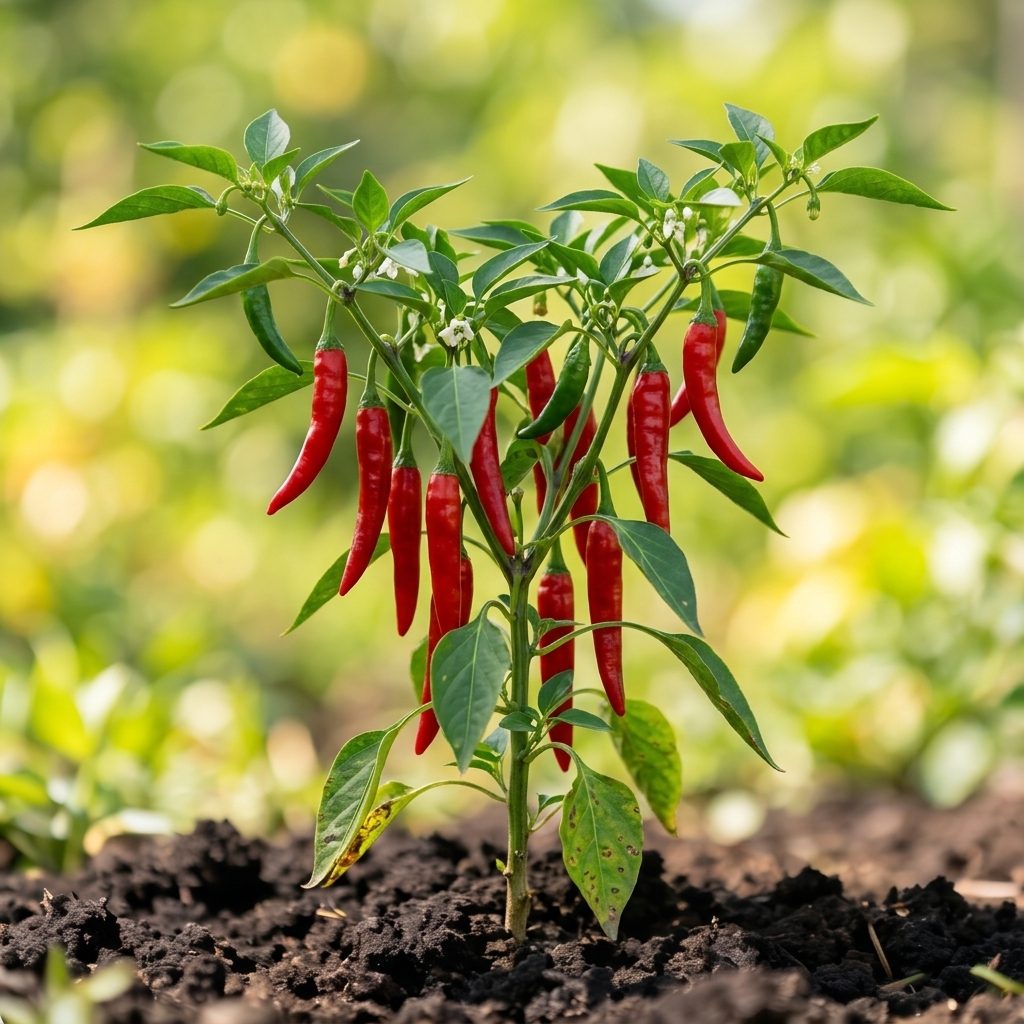
Piment De Cayenne
Capsicum annuum
Piment rouge élancé, 30 000 à 50 000 Scoville, condiment universel.- Source exceptionnelle de capsaïcine aux propriétés analgésiques prouvées
- Riche en vitamine C, vitamine A et antioxydants protecteurs
- Stimule le métabolisme et soutient la santé cardiovasculaire

certifiées bio

France
Profil de la plante

Calendrier de culture
Conseils de culture
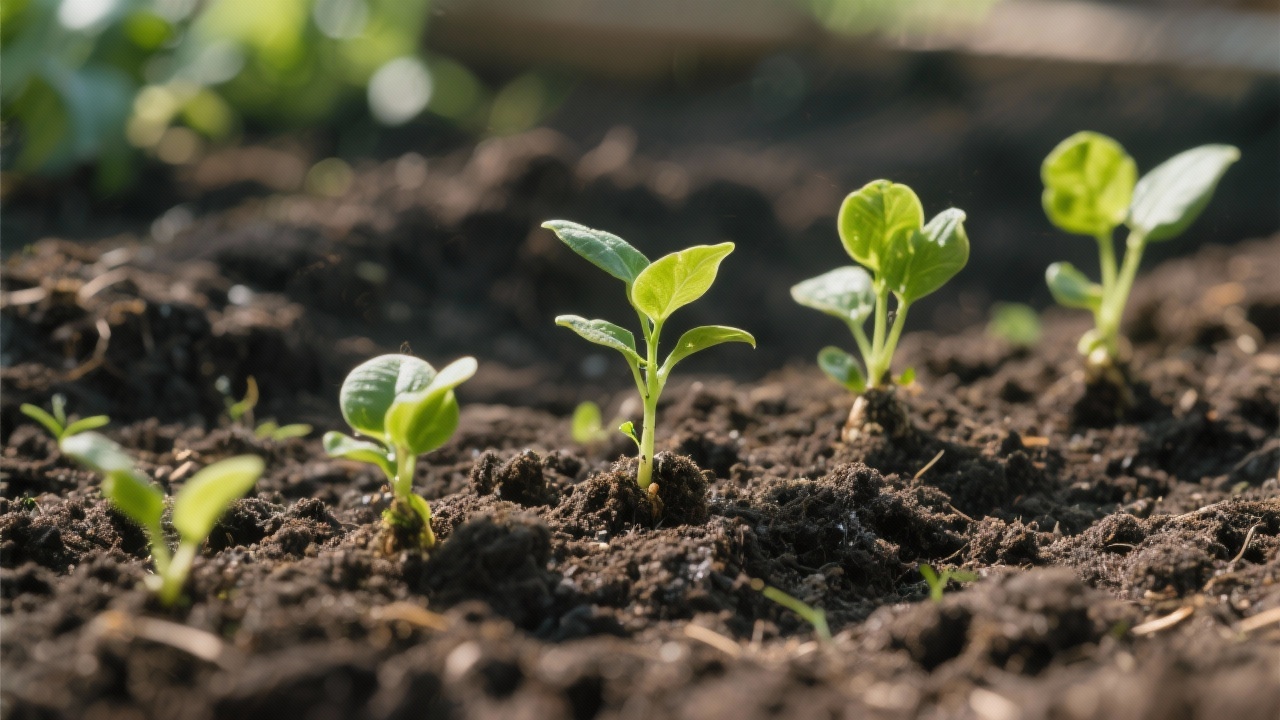
Semis et conditions de germination du piment de Cayenne
Le piment de Cayenne se sème en intérieur à partir de janvier ou février pour bénéficier d'une longue saison de croissance favorable à une bonne production. La germination est directement conditionnée par la chaleur : la température du substrat doit être maintenue entre 25 et 28 °C de façon continue pour obtenir une levée satisfaisante en 10 à 15 jours. Un tapis chauffant est vivement recommandé. Utilisez un substrat de semis léger, légèrement humidifié, et semez 2 graines par case à 5 mm de profondeur. Couvrez d'un film plastique ou d'une cloche transparente pour conserver l'humidité et la chaleur ambiante. L'apport de lumière artificielle via un tube LED horticole améliore significativement la qualité des jeunes plants en janvier-février.
Développement des jeunes plants jusqu'à la plantation
Dès la levée, exposez les plants à un maximum de lumière tout en maintenant la chaleur à plus de 20 °C. Éclaircissez à un plant par godet quand les deux pousses sont bien visibles. Au stade 4 à 6 vraies feuilles (6 à 8 semaines après semis), repriquez dans des godets de 10 à 12 cm avec un substrat enrichi. La fertilisation légère au démarrage, à base de compost liquide dilué, stimule le système racinaire sans forcer la croissance aérienne. Acclimatez progressivement les plants à l'extérieur à partir de mai avant la mise en pleine terre définitive après les saints de glace.
- Température : 25-28°C, tapis chauffant impératif
- Humidité : Substrat légèrement humide sous film plastique
- Lumière : Lumière artificielle recommandée janvier-février
- Repiquage : 4-6 vraies feuilles, en mai dans godets 10-12 cm
Points clés
- Température : 25-28°C, tapis chauffant impératif
- Humidité : Substrat légèrement humide sous film
- Lumière : Lumière artificielle en janvier-février
- Repiquage : 4-6 vraies feuilles, mai
Plantation du piment de Cayenne en pleine terre
La plantation en pleine terre intervient à partir de fin mai, uniquement lorsque les températures nocturnes dépassent régulièrement 15 °C. Choisissez un emplacement très ensoleillé, abrité des vents froids, avec un sol léger, profond et bien drainé. Incorporez au sol une bonne dose de compost mûr (4 à 5 litres par m²) et un apport d'engrais organique riche en phosphore et potassium pour préparer la base de fertilité. En régions à étés frais (Alsace, régions montagneuses), la culture sous tunnel ou voile thermique accélère la production et garantit une récolte satisfaisante même lors des étés peu chauds.
Installation et premiers soins post-plantation
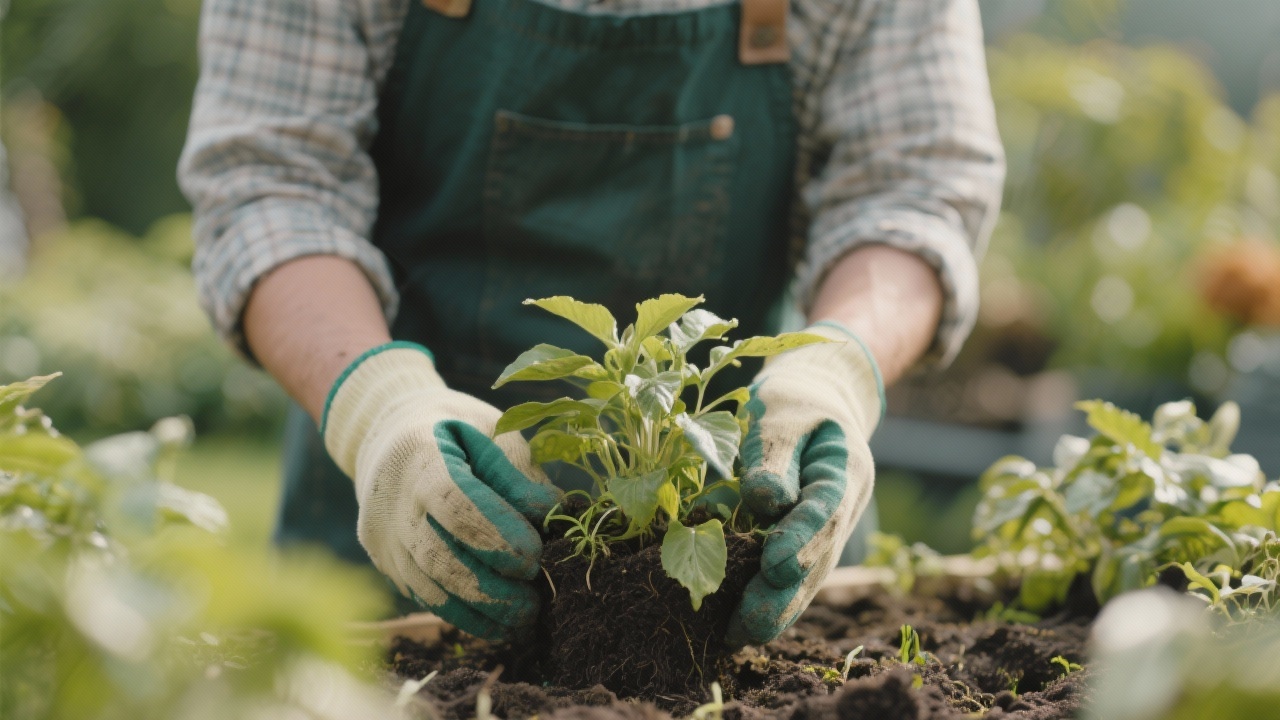
Plantez chaque pied à la même profondeur que dans le godet avec un espacement de 40 à 50 cm entre plants. Arrosez copieusement au pied immédiatement après la mise en terre. Installez un tuteur solide pour chaque plant dès la plantation pour anticiper la future charge en fruits qui peut courber les tiges. Un paillage de 8 à 10 cm de paille ou de foin autour des pieds maintient le sol chaud et humide, deux conditions indispensables pour une bonne fructification. En cas de temps frais persistant les premières semaines, maintenez un voile de forçage la nuit.
- Profondeur : Identique au godet, même niveau
- Espacement : 40-50 cm entre plants, 60 cm entre rangs
- Arrosage : Copieux à la plantation, puis modéré et régulier
- Paillage : 8-10 cm paille ou foin, maintient chaleur et humidité
Points clés
- Profondeur : Même niveau que le godet
- Espacement : 40-50 cm entre plants
- Arrosage : Copieux puis modéré
- Paillage : 8-10 cm pour chaleur et humidité
Entretien et conduite du piment de Cayenne
L'entretien du piment de Cayenne repose sur un équilibre hydrique rigoureux : ni sécheresse prolongée qui provoque la chute des fleurs, ni excès d'eau qui favorise les pourritures racinaires. Arrosez régulièrement au pied, 2 à 3 fois par semaine en été, en veillant à ce que le sol soit légèrement humide sans être gorgé. La fertilisation bimensuelle à base d'engrais organique tomates (riche en K et P) à partir de la mise à fleur améliore considérablement le calibre et la qualité des piments. Supprimez les premières fleurs qui apparaissent avant 8 semaines après la plantation pour renforcer la structure du plant et obtenir une production plus tardive mais plus abondante.
Protection sanitaire spécifique aux solanacées
Le piment de Cayenne partage avec la tomate et l'aubergine une sensibilité aux mêmes ravageurs et maladies. Les pucerons verts et noirs colonisent volontiers les tiges et l'envers des feuilles : intervenez dès les premières colonies avec un traitement au savon noir potassique. Les acariens rouges prolifèrent par temps chaud et sec : pulvérisez de l'eau sur le feuillage matin et soir pour augmenter l'hygrométrie. Le mildiou et le botrytis se manifestent lors des étés humides : améliorez la ventilation et supprimez les parties atteintes rapidement. La pratique de la rotation des cultures (minimum 3 ans entre solanacées) reste la mesure préventive la plus efficace.
- Type de sol : Sol riche, légèrement acide pH 6,0-6,8, bien drainé
- Entretien : Fertilisation organique bimensuelle, tuteurage, suppression 1res fleurs
- Arrosage : 2-3 fois/semaine au pied, sans excès ni sécheresse
- Action préventive : Rotation 3 ans solanacées, surveillance pucerons/acariens
Points clés
- Type de sol : Riche, légèrement acide pH 6,0-6,8
- Entretien : Fertilisation K-P bimensuelle, tuteurage
- Arrosage : 2-3 fois/semaine, modéré et régulier
- Action préventive : Rotation 3 ans, surveillance ravageurs solanacées
Récolte des piments de Cayenne
Les piments de Cayenne atteignent leur pleine maturité entre 90 et 120 jours après la plantation en France. Ils passent du vert au rouge vif en mûrissant, un processus qui peut prendre 3 à 4 semaines. La récolte s'effectue selon l'usage : verts pour les pickles et les préparations fraîches, rouge vif pour le séchage et la poudre de piment. Utilisez systématiquement des gants car la capsaïcine irrite fortement la peau et les muqueuses. Coupez les piments avec des ciseaux propres en laissant 1 à 2 cm de pédoncule pour ralentir la déshydratation. La cueillette régulière stimule la production de nouveaux fruits tout au long de la saison.
Conservation et transformation : séchage, poudre et pickles
Le séchage à l'air libre ou au four constitue la méthode de conservation la plus traditionnelle et la plus efficace pour le piment de Cayenne. Enfilez les piments sur un fil et suspendez-les dans un endroit chaud, sec et bien ventilé pendant 2 à 4 semaines. Le four à 60-70 °C pendant 8 à 12 heures donne un résultat comparable. Les piments séchés se réduisent facilement en poudre de cayenne au moulin à épices, à conserver dans un bocal hermétique à l'abri de la lumière. La congélation des piments frais entiers conserve très bien la capsaïcine et la couleur. La mise en bocaux dans du vinaigre de cidre produit d'excellents pickles piquants qui se conservent 1 à 2 ans.
- Période : Août-octobre, 90-120 jours après plantation
- Stade : Vert (usage frais) ou rouge vif (séchage/poudre)
- Méthode : Ciseaux propres, gants obligatoires, 1-2 cm de pédoncule
- Stockage : Séchage (poudre), congélation ou pickles au vinaigre
Points clés
- Période : Août-octobre
- Stade : Vert (frais) ou rouge (séchage)
- Méthode : Ciseaux propres, gants obligatoires
- Stockage : Séchage en poudre, congélation ou pickles
La poudre de cayenne, épice universelle de la cuisine mondiale
Le piment de Cayenne est l'une des épices les plus universellement utilisées dans le monde. Sa forme séchée et moulue – la célèbre poudre de cayenne – relève soupes, sauces, marinades et viandes avec une chaleur franche et directe. En cuisine cajun et créole, il est indispensable dans le gumbo et les plats mijotés. En cuisine mexicaine, il entre dans la composition de la poudre chili. Les piments frais verts se cuisinent en chutney, salsa et sauce piquante maison. Tranché finement et macéré dans l'huile d'olive, il produit une huile aromatisée piquante précieuse pour les pizzas, les pâtes et les plats méditerranéens.
Capsaïcine, propriétés médicinales et précautions
La capsaïcine du piment de Cayenne est un des composés bioactifs les plus étudiés en pharmacologie alimentaire. Elle possède des propriétés analgésiques (utilisée en crèmes topiques contre les douleurs articulaires), thermogéniques (stimule le métabolisme) et cardiovasculaires (améliore la circulation). Le piment de Cayenne est riche en vitamine C, vitamine A, capsaïcinoïdes et flavonoïdes. En usage culinaire régulier et modéré, il contribue à la santé cardiovasculaire et digestive. Manipulez toujours avec précaution : portez des gants pour couper les piments frais et évitez tout contact avec les yeux. Pour calmer le feu en bouche, consommez du lait, du yaourt ou de l'huile – jamais d'eau.
- Profil gustatif : Chaleur intense, franche et directe, légèrement fruité
- Préparations classiques : Poudre condiment, sauces piquantes, huile aromatisée, pickles
- Accords gagnants : Viandes grillées, légumineuses, chocolat noir, citrus, ail
- Conservation : Poudre hermétique 2 ans, pickles vinaigre 1-2 ans, congélation
Points clés
- Profil gustatif : Chaleur intense et franche, légèrement fruité
- Préparations classiques : Poudre cayenne, huile pimentée, salsas
- Accords gagnants : Viandes, légumineuses, chocolat, citrus
- Conservation : Poudre 2 ans, pickles vinaigre, congélation