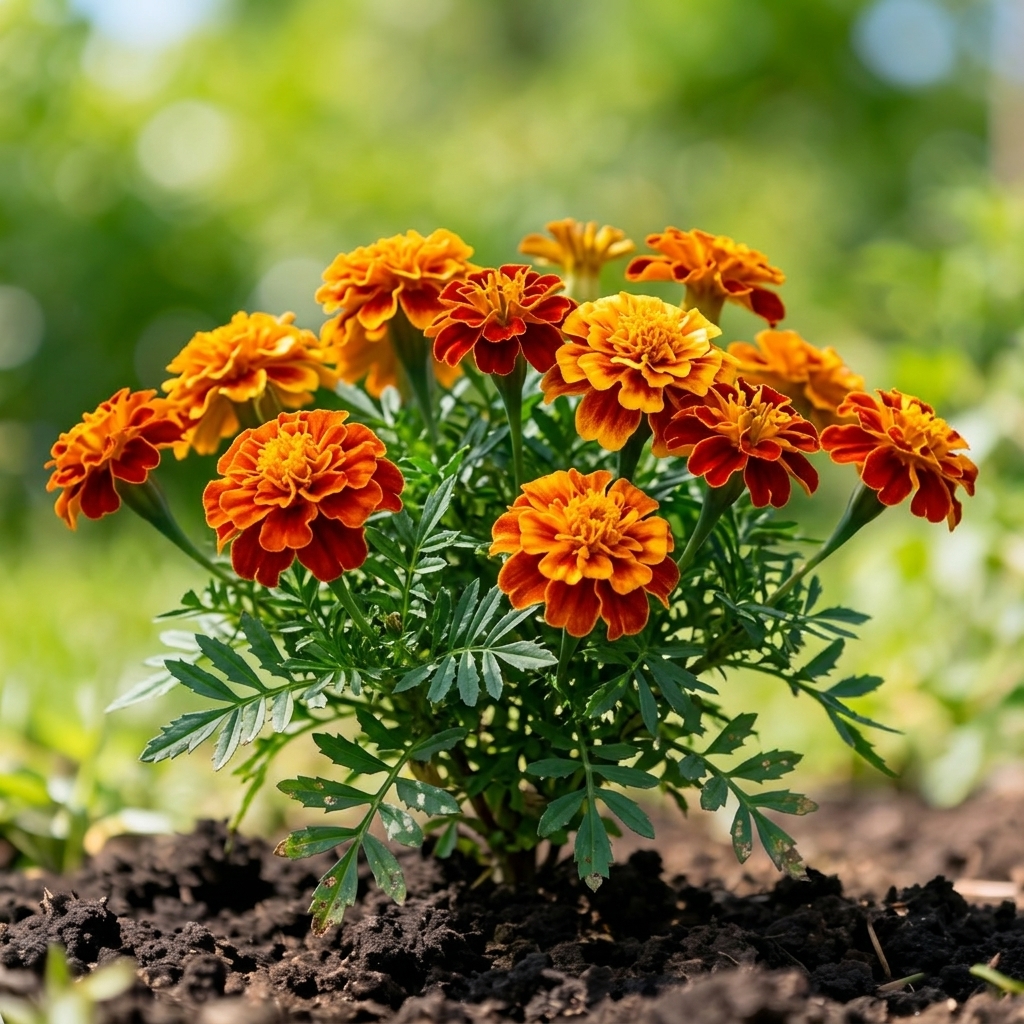
Marigold
Tagetes patula
Repellent flowers for pests, robust and flowering.- Promotes biodiversity and attracts pollinators
- Easy to grow in vegetable gardens and containers
- Decorative and edible addition to the vegetable garden

certifiées bio

Pays-Bas


Profil de la plante

Calendrier de culture


Conseils de culture
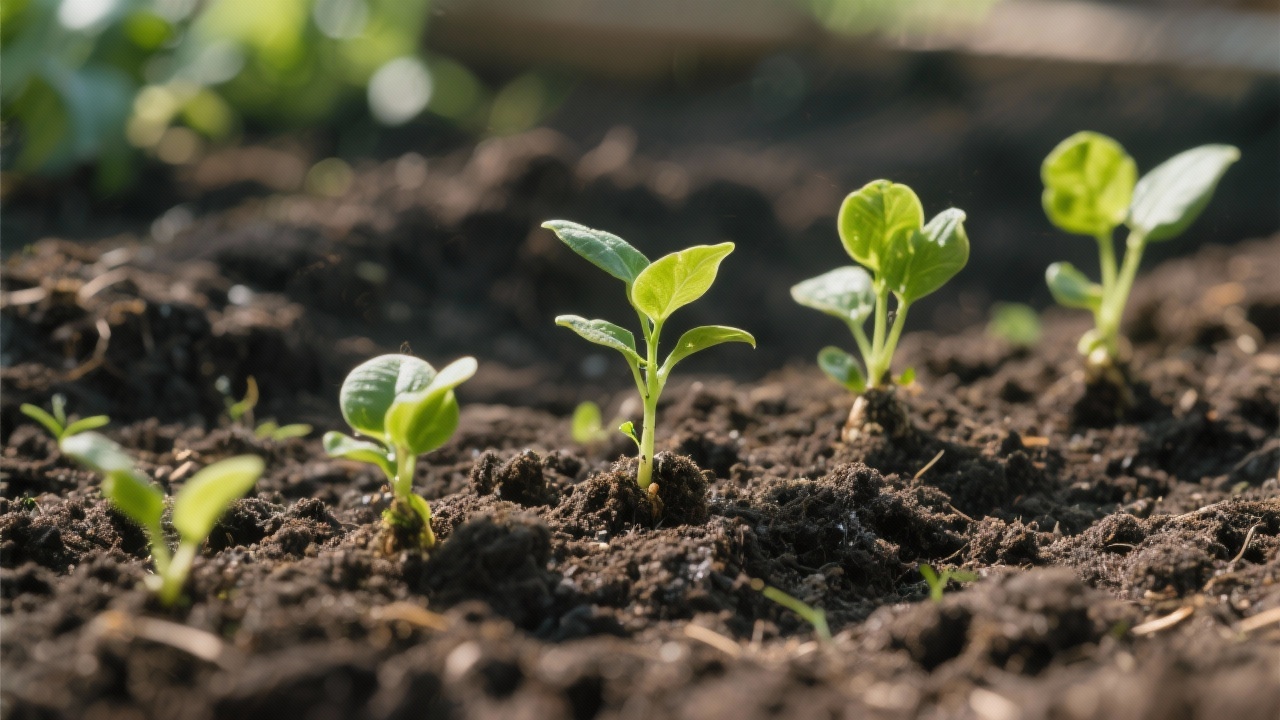
Sowing of Marigold
Sow under cover or in place when the soil reaches 12–15 °C. Use a light and draining substrate, maintain regular moisture without excess. Germination occurs in 7 to 14 days. Useful in crop associations in the vegetable garden.
À retenir
- Temperature: 15–20 °C
- Humidity: Moist substrate, not waterlogged
- Light: Full sun after germination
- Transplanting: 3–4 true leaves
Conditions and Preparation for Planting Marigold
Marigold (Tagetes) is planted after the frost, when the soil exceeds 12 °C. Ordinary, drained, and sunny soil. Marigolds tolerate heat and repel certain garden pests — ideal for borders.
À retenir
- Depth: Collar at soil level, do not bury
- Spacing: 25–35 cm between plants, 40 cm between rows
- Watering: Generous watering at establishment, then regular during dry periods
- Mulching / Protection: Organic mulch 3–5 cm, avoid excess water at the collar
Growth and vigor management of the plant
The marigold requires little maintenance: watering during drought, removing faded flowers to prolong blooming until autumn. Avoid excessive nitrogen inputs.
À retenir
- Soil type: Ordinary, drained, neutral pH 6.0–7.5
- Maintenance: Remove faded flowers, thinning if clump is dense
- Watering: 2–3×/week in summer, keep soil moist without waterlogging
- Preventive action: Rotation, spacing, avoid watering on foliage
Harvest of Marigold
Harvest leaves or flowers according to use, preferably in the morning after dew. Consume quickly or dry at low temperature.
À retenir
- Period: Summer to autumn
- Stage: Fully open flowers / tender leaves
- Method: Clean cut with scissors
- Storage: Fresh for 3–5 days in the refrigerator
Use of Marigold
Use in cooking, infusion, or edible decoration depending on the species. Optimal aroma and flavor when consumed fresh.
À retenir
- Profile: Aromatic, floral, or slightly peppery
- Uses: Salads, infusions, seasoning
- Pairings: Garden vegetables, fresh herbs
- Storage: Drying or freezing possible

Plants compagnons